

Key takeaways
- Define the problems to solve, and what will stay, before changing how the villa looks.
- Review services, scope and budget before finalising the layout or committing spending.
- Settle kitchen and wardrobe decisions early, and agree how completion will be checked.
A kitchen can be beautiful and still lack room for the appliances you use. New flooring can be laid before the layout is settled, leaving parts of the work to be changed. In a villa renovation, decisions that look small at the start can shape how much you enjoy the finished home.
When speaking with interior designers in Dubai, ask which decisions need to come before others. The seven choices below deserve attention before demolition, fabrication or major orders make a change more difficult.
1. Changing the appearance before defining the problem
Write down the problems you want to address. You may need a more practical kitchen, better storage, additional privacy or a living area that works when guests visit. Separate essential improvements from features you would like if the budget allows.
Use that list to assess the design. A beautiful proposal should still answer the original brief. If you are renovating before moving in, explain your household routines rather than relying only on how the previous owner used the rooms.
2. Keeping old elements without checking the connection
Identify finishes, fixtures and joinery that may be retained, then have their condition assessed. The decision to keep an element should consider how it connects with new work. Existing flooring, for example, can affect levels, thresholds and the appearance of adjoining rooms.
Record the boundaries of the renovation. A complete redesign and a selective upgrade involve different scopes. Being specific about what stays helps the team plan protection, measurements and transitions.
3. Finalising the layout before reviewing services
Ask the team to assess relevant electrical, plumbing and air-conditioning arrangements before the layout is finalised. A kitchen island, additional bathroom storage or a revised ceiling can interact with equipment and service routes.
Discuss any specialist investigations needed for the proposed work. An early review cannot reveal every concealed condition, so agree how discoveries will be documented and how changes will be approved if the scope needs to develop.
4. Spending the budget before the scope is clear
Villa renovation cost in Dubai depends on more than floor area. The amount of demolition, condition of retained elements, specification of finishes and quantity of custom joinery influence what is being priced.
Ask for an itemised proposal with allowances and exclusions. Discuss a contingency suited to the project rather than treating every available dirham as committed spending. Establish how optional items can be adjusted without compromising essential work.
5. Treating the programme as a date alone
Agree who handles site coordination, building management communication and any project-specific approvals. Have the appropriate team confirm requirements for your property and proposed scope before work starts.
Discuss access, deliveries, working arrangements and whether the villa will be occupied. If you are living in the home, ask how the sequence affects access to essential rooms and services. If you will move out, coordinate that plan with the agreed programme.
6. Leaving kitchen and wardrobe decisions too late
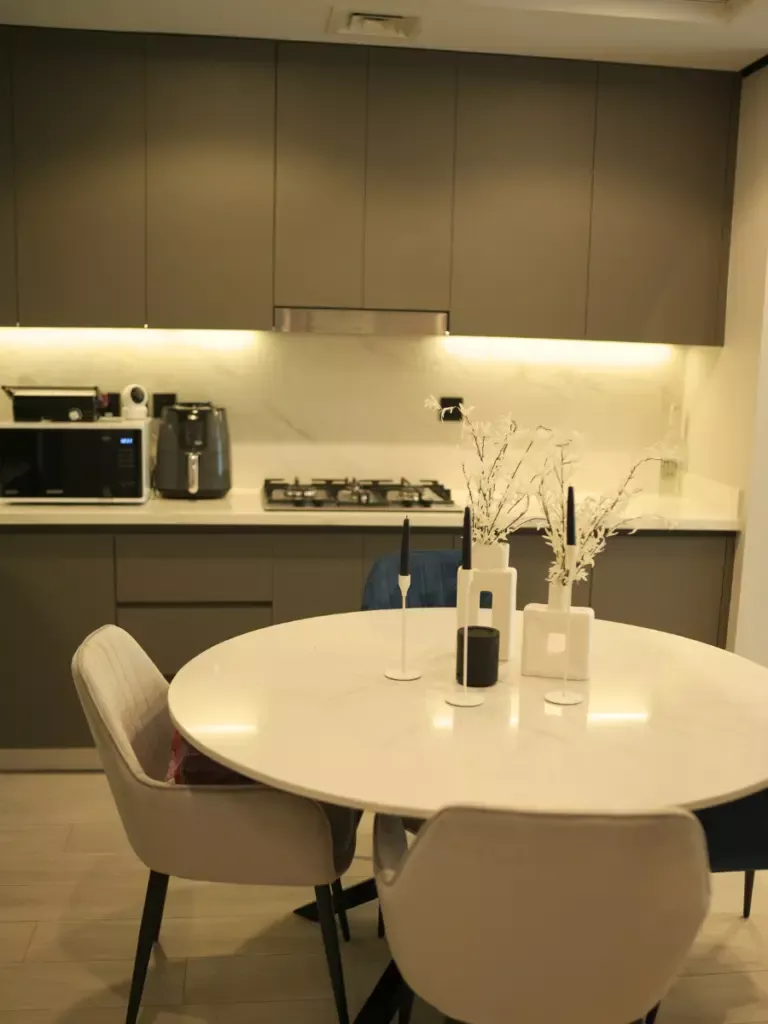
Kitchens and wardrobes connect dimensions, appliances, services and materials. Confirm the functional layout and key specifications before fabrication. Review door openings, drawer access, appliance sizes and the items each storage area must hold.
Agree when materials will be selected and ordered. A late change to a worktop or fixture can affect measurements and installation. Ask the team which selections need to be settled first so you can make decisions in a useful order.
7. Waiting until handover to define completion
Discuss the inspection and handover process at the beginning. Decide how completed work will be checked against approved drawings and specifications, and how outstanding items will be recorded.
Keep a record of selections and authorised changes. Request the care information and warranty documents relevant to installed products. This gives you a practical basis for checking completion and maintaining the home afterwards.
Start with the property and your priorities
Bring your floor plans, current photographs and list of requirements to the first consultation. Include your preferred timing and investment range, then allow the team to assess what the scope involves. A useful renovation proposal develops from that information.
NITS Decor designs and executes residential interiors, with custom joinery produced through its own workshop. Contact the team to discuss your villa, the areas you want to change and the steps needed to develop a considered renovation plan.